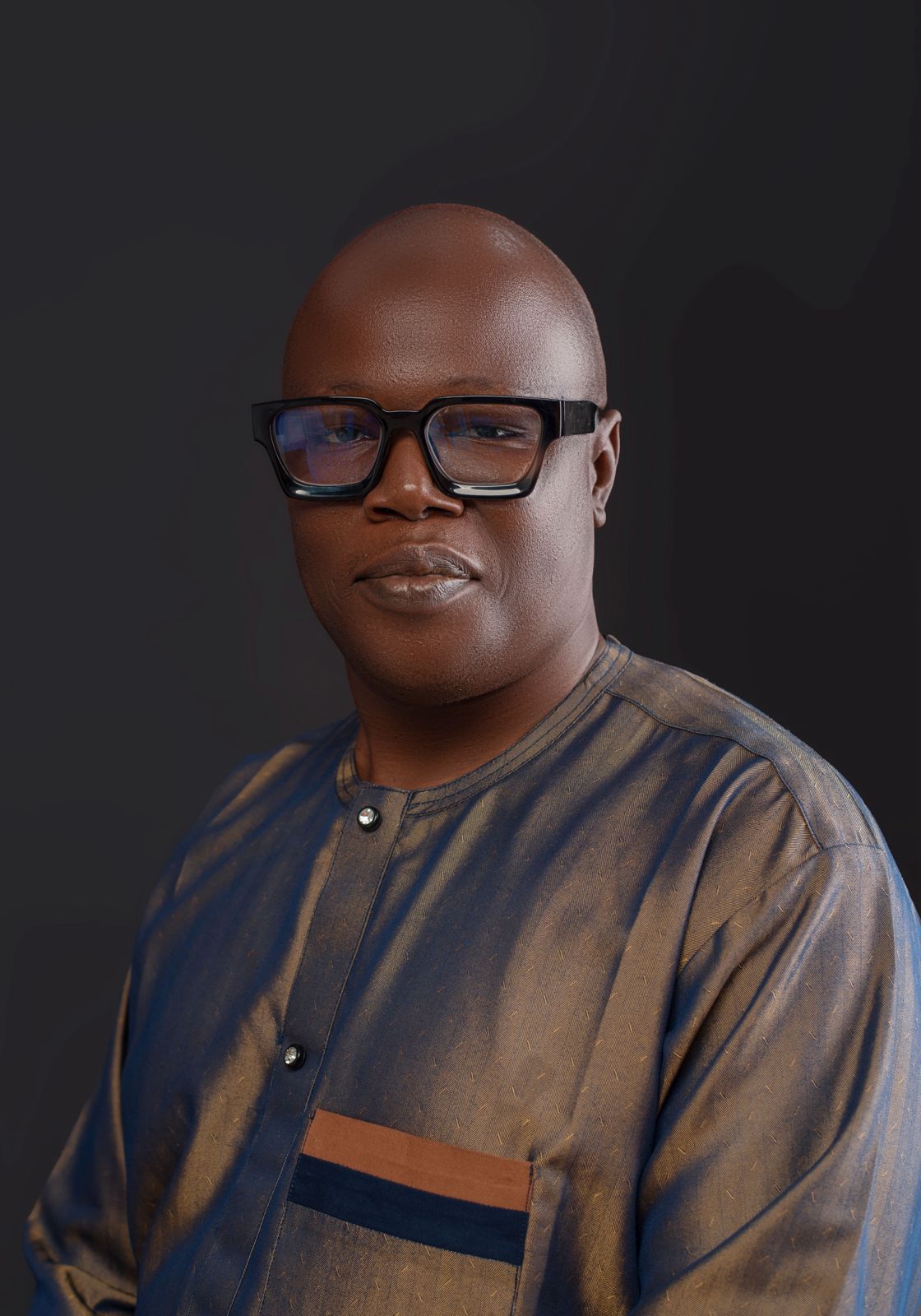

These three poems by Servio Gbadamosi were especially chosen for The Bala Selection.
The Bala Selection is a bi-weekly poetry feature curated by Ismail Bala for Konya Shamsrumi, showcasing distinctive new voices and resonant works from across Africa and beyond. Through his discerning eye, each selection highlights the craft, music, and emotional clarity that define contemporary poetry in its most luminous form.
Ismail Bala is a poet, translator, and critic whose work bridges classical poetics and modern sensibility, and whose mentorship has shaped a generation of emerging African poets.
Love has no safe handle
To love is to live,
to live is to love,
to love is to die,
to die is to return,
to return is to become like
the sun burning its brightness
into the darkness we carry.

I have not found an astrologer
who can chart the map of love
as clearly as the desert dwellers
read the gossip of stars.
For love is a desert when the
sea is gone, its thirst and sands
shifting without end.

Love is music, love is dance.
It is the laughter of children
running through rain.
It is joy, it is sorrow—
the sweet-bitter kola
that keeps the world awake.

Love is rough,
love is smooth.
It scrapes the skin like
sandpaper leaves,
then soothes like a
swaddle on the cheek.

Love is cowage,
love is carnage.
Love is the velvet bean
in the hand of lovers.
It has no safe handle—
whichever way you touch,
it burns, it lingers, it remembers...
Questions for Godot
My daughter asks me:
what shape is the moon—
a crescent, a present, or a circle?
Do the stars twinkle
when they laugh?
Why does the moon smile
every time I ask for stories?
Where does rain come from?
Is the sky a curtain
held up by stars?

Where does the sun sleep at night?
Does the moon fight
her sister the way mine fights me?
Why are you always working
so hard, Daddy?
When are you coming home—
early, or late?

I ask myself these questions too:
Why was I born in Nigeria?
Does this white Christ
really care about me?
How do I explain the world
to a six-year-old—
or speak of the dearth of kindness
on this sun-scorched earth?

My wife questions me too—
about the ways of the world,
the meaning, or meaninglessness, of life.
About what we are building for the future,
and when we too, like our comrades,
will flee this land
for the old slave mill.

But all I want
is to be a child again—
tied to my mother's breast,
without a care.
A man should not have to wonder
every single day
why he is doing this thing called life;
why he is trapped
in this cesspool of
shit and sunshine
looping endlessly.
Where laughter used to live
(For the children we have lost, and are losing to needless conflicts)

What becomes of a child
whose cradle is a refugee tent,
whose lullaby is the crack of gunfire,
whose playground is the shadow of a tank?

Do they still believe the earth loves them?
That the sky remembers their names?
Do they still dream of home—
of grandmothers' songs, of mango trees,
of the scent of roasted maize
wafting through the harmattan haze?

The flowers are gone from their paths.
What blooms now are graves—
unmarked, unspoken, unwept for.
Brothers taken. Sisters vanished.
Mothers hollowed out by wailing.
Fathers buried in shallow pride,
unable to protect what mattered most.

In the corners of burnt classrooms,
in the echo of a stolen football kicked
through dust and broken fences,
in the way a child draws the sun
on the wall of a camp with charcoal—
the children seek answers as the world looks away.

Where is the country they were born into?
Where is the promise of their names?
Where is the warmth of the fire
where elders once told stories
and hope had a rhythm, a rhyme?

How long will they carry the weight of a nation's failure
in their small, determined hands?
Who will rebuild the house of belonging,
where every child can once again
be held by the land that bore them?
About Servio Gbadamosi
Servio Gbadamosi is an award-winning Nigerian poet, publisher, and creative visionary whose work draws deeply from Yorùbá cosmology, African spirituality, and the lived experiences of ordinary people. His poetry has been described as “elegiac and visionary, an archive of cultural memory and a compass for collective healing.”
Gbadamosi’s debut poetry collection, A Tributary in Servitude, won the Association of Nigerian Authors Poetry Prize in 2015, and was a finalist for the Wole Soyinka Prize for Literature in Africa in 2018. His second collection, Where the Light Enters You, was a finalist for both the Association of Nigerian Authors Poetry Prize in 2021, and the inaugural Pan African Writers Association Poetry Prize in 2022.
Through Noirledge Publishing, which Gbadamosi founded, he has championed underrepresented voices in African literature and also helped midwife fantastic titles such as Jude Idada’s Boom Boom, and Olubunmi Familoni’s The Road Does Not End, which won the Nigeria Prize for Literature in 2019 and 2024 respectively.
Beyond writing and publishing, Gbadamosi is a sought-after speaker at literary festivals and cultural convenings. Through initiatives including ‘The Poems I Love’ podcast, Noirledge Anthology Series, Ìbàdàn Book and Arts Festival (ÌbàFest), and Laipo Magazine, he continues to shape critical conversations on literature, identity, and the future of the nation’s cultural and creative industries.