
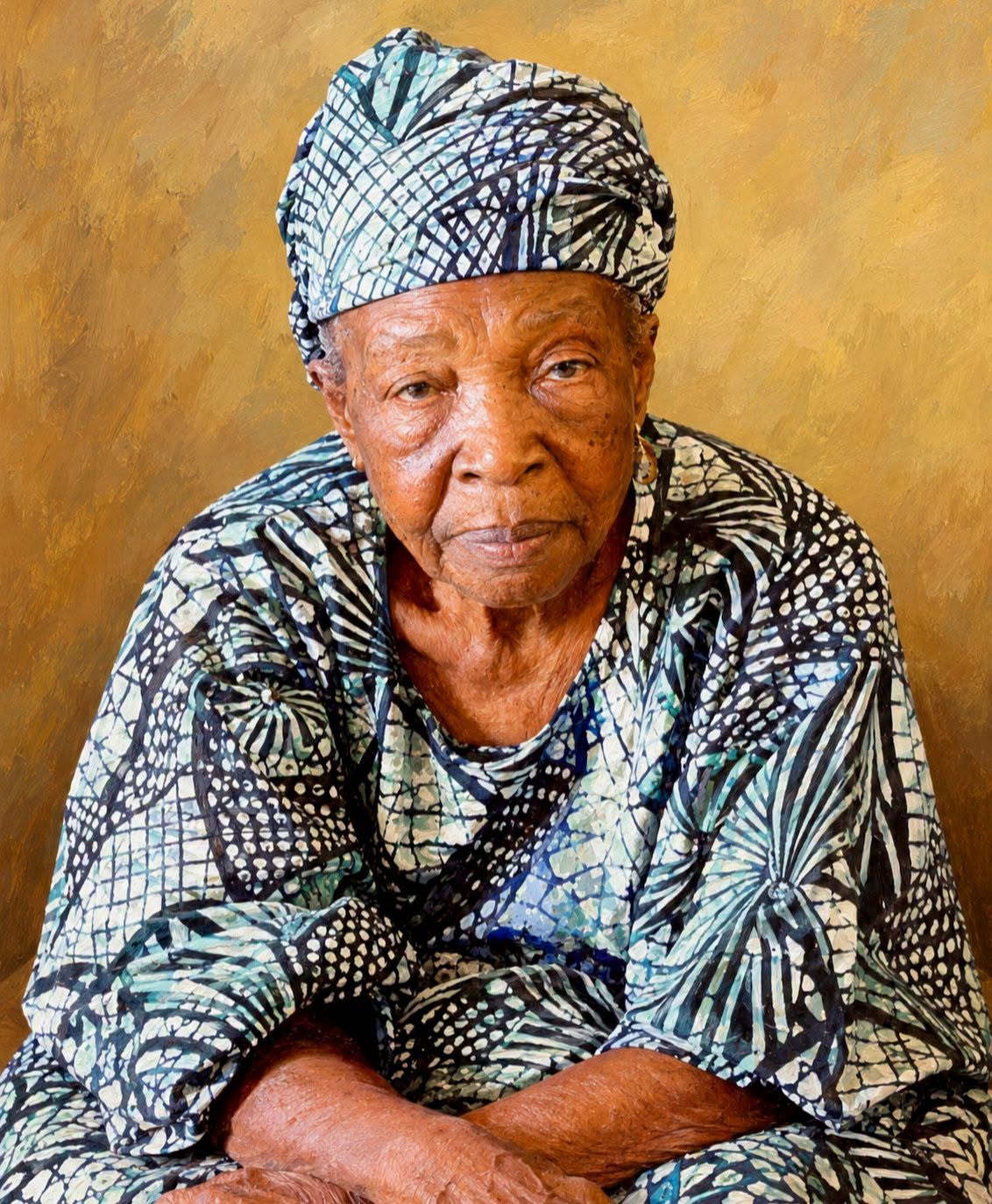

The Woman Who Made Us Wait
I sat beside Maman Daddy’s nursing bed, a small cot in a simple room painted a shiny cream. The room had the unpretentious order of a place that had gradually been rearranged around illness: a refrigerator, a carpet, a rechargeable oscillating fan, a cupboard and a wall clock ticking its way through five-thirty-something in the evening. Outside, the day was beginning to loosen its grip on the city. But inside that room, time had worn another meaning. It seemed to move not by minutes but by each breath Maman Daddy took.
I watched her chest rise and fall. Her flesh had become so thin that it seemed to have forgotten how to conceal the architecture of her bones. Her arms looked almost weightless. Her face had been reduced to an astonishing stillness. I listened to the agonisingly forceful snore of a body labouring for air, each breath sounding less like the unconscious rhythm of sleep and more like an argument with death. There was something unbearable about listening to someone breathe as though breathing itself had become labour.
She was eighty-four. Or close enough. We never knew her exact birthday. Facts about her birth, being our only surviving grandparent, were not recorded with the precision of birth certificates and official documents. They were woven instead into the larger stories by which we knew her: Nigeria’s independence a few years before her marriage to my grandfather, her first childbirth a few years after Abubakar Tafawa Balewa became Prime Minister, and the circumstances that brought two people from different places into the same life.
My grandfather had been sent to serve as the judge of a group of villages, including hers, Anchau, now in Kubau Local Government Area of Kaduna State, sometime in the late pre-Independence Northern Region. She was his third wife. A Hakimi had spoken to my grandfather about her. My grandfather became interested. The Hakimi spoke to her father. Her father approved. Her approval wasn’t sought because it didn’t matter. This was common in her time.
“I never looked him in the eye whenever he came to see me,” she once told us, laughing. “The first time I properly looked at him was on the first morning of our marriage.”
She told the story with the amusement of someone looking back at a younger version of herself from the safe distance of old age, and not with the irritation of someone who thought she had a right that was denied. I remember the laughter more than the words. Some stories remain with us due to the unembellished texture of a person’s voice.
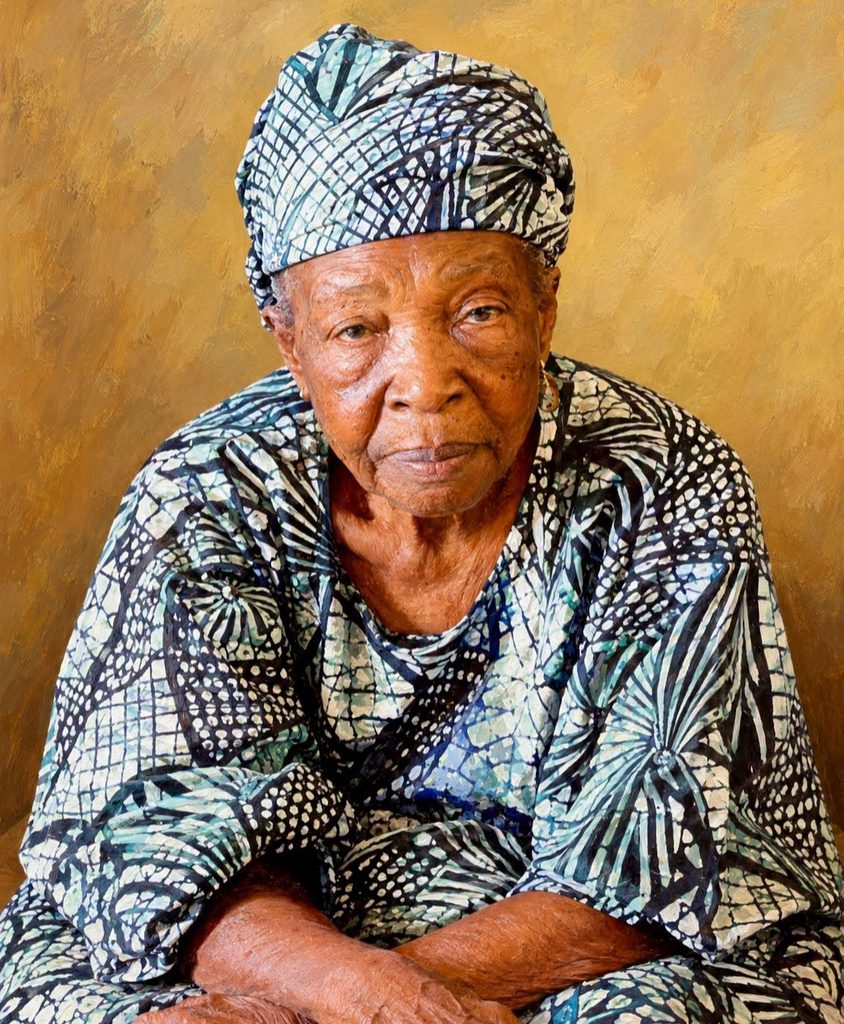
Now, sitting beside her nursing bed, she looked the oldest I had ever seen her. I had already become almost as familiar with the language of her illness as my mum. Over the painful three years of her sickness, I had read almost everything I could find about heart failure. I learnt the terminology, the symptoms, the progression, the things that could happen next to an eighty-something-year-old’s heart damaged by hypertension. Whenever my mum called to tell me about a new symptom, I had often read about it somewhere while lying in my bed at home or sitting at my desk in the office or while commuting back home inside stuffy Abuja ‘Along,’ trying, in the peculiar helplessness of loving someone who is ill, to educate myself out of fear. Sometimes I was the one who communicated her symptoms more precisely to her doctor.
It was a strange kind of knowledge: useful and utterly powerless at the same time. I could name what was happening inside her body, but I could not make it stop. I could understand the language of the disease, but I could not translate it into a cure. It’s one of the cruelest things about watching someone you love grow ill. To acknowledge the darkness while lacking the power to turn on the light.
Everyone says Maman Daddy was a good woman. I also think she was. But goodness, when you have lived with someone for almost half your life, is rarely a sufficient word. It is too polished, too complete. A person you have known intimately cannot remain a saint in your memory. You remember the whole human being: her kindness and her irritations, her laughter and her silences, the tenderness she offered without announcing it and the small things she did that annoyed you terribly. The things she did so often that you barely noticed them until, years later, you realise that they were part of the texture of your childhood.
She was jovial and deeply cultured. She carried the old-fashioned social grace of a generation for whom community was not an abstract ideal but an ordinary way of living. Her world was larger than the walls of her own house, and perhaps I did not understand this as a child because childhood has a natural selfishness. A child thinks affection should be measured by proximity: if you love me, you should give to me first.
Whenever Maman Daddy went to the village and returned, she usually came back with things from there, things most available in northern Nigeria’s rural areas. There were always little treasures of one kind or another, things grown in places that seemed, to us children, to possess a mysterious abundance unavailable in the city.
But she would never give them to us, her immediate grandchildren, first. Never. She would give some to my cousins, the grandchildren of her co-wives. She would give it to neighbours. She would share with people who had no claim on her except that they were people within the reach of her generosity. Only after everyone else had received their share would she finally get around to us.
This annoyed me enormously. We were her real grandchildren. We were the ones who belonged to her most directly. Why should she make us wait while somebody else’s child (or even somebody who was not family at all) received what she had brought home?
I remember the feeling of waiting more than I remember the things themselves. But I understand it now. There is a word for it in Hausa: kaara.
It is difficult to translate the word ‘kaara’ neatly because, like many beautiful cultural ideas, its meaning is larger than its dictionary equivalent. It is an instinct to extend your care beyond the boundaries of your immediate household; to understand that another person’s child is also your child. It is generosity with a social conscience. The unimposing refusal to let love become selfish.
I think about this now, sitting beside her bed, listening to the difficult machinery of her breathing, and I find myself revisiting some of the memories I had filed away as childhood grievances. The things that irritated me. The things I thought were unfair. The things I wished she would do differently. Age has a way of returning old memories to us with their labels removed.
Now I didn’t see only the woman lying beneath a blanket, her chest rising and falling with painful effort in that little cream-painted room, but the young woman who once refused to look her intended husband in the eye because she feared it would seem disrespectful; the grandmother returning from the village with things tucked in her bags for sharing; the woman who could make her immediate grandchildren wait because, in her understanding of the world, there was always somebody else to consider first.
Aliyu Jalal is a communication strategist and storyteller. Born in Zaria, he lives and works in Abuja. His essays, poems and short stories have appeared in national and international publications.
